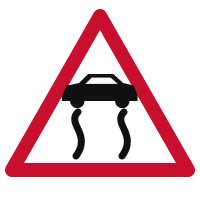
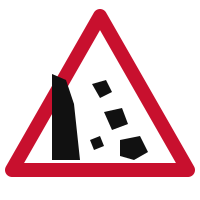
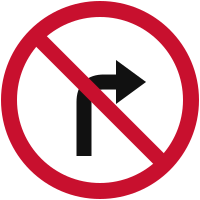
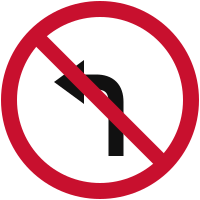
Read the question, choose your answer, then check it against the green answer underneath. The best way to use this list is to cover the answers, answer a section at a time, and then read the rule for any question you got wrong. When you are ready, take the learner licence mock test to practise under the real time limit.
Road signs and road markings
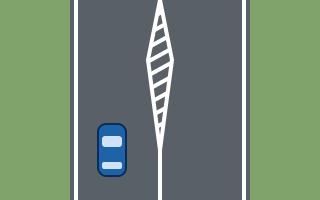
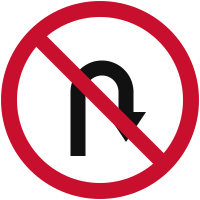
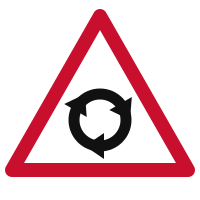
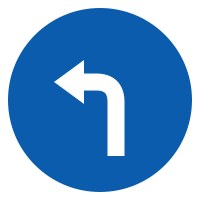
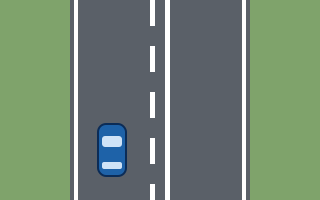
1. You see this sign at the start of a traffic island. What must you do?
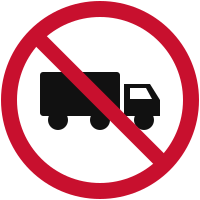
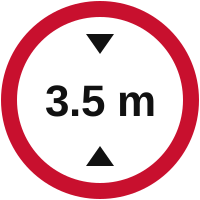
43. Your van with luggage on the roof rack is 3.7 metres high. You see this sign. What should you do?
Drive through slowly
Do not go on; take another route ✓
Let some air out of the tyres
Drive through in the centre
Answer B. The sign gives the maximum height of vehicles allowed. Remember the extra height of a roof load. Rule: Loads, Roof Racks & Towing
Road Position & Lanes
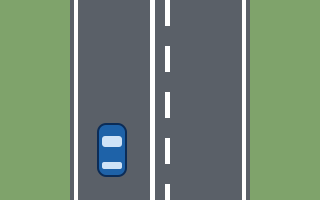
44. On an ordinary two-way road in India, where should your vehicle normally be?
In the middle of the road, so you can see both sides
Generally to the left, leaving safe clearance from the road edge ✓
As close to the left kerb or drain as physically possible
On the right, so you are ready to overtake
Answer B. India drives on the left. Keep generally to the left of the carriageway so oncoming traffic passes on your right, but leave sensible clearance from kerbs, drains, parked vehicles, pedestrians and cyclists. Rule: Road Position: Keep Left Safely
45. On a multi-lane carriageway, which vehicles must use the left lane except when passing an obstruction or slower vehicle?
Only two-wheelers
Cars carrying passengers
Heavy and speed-restricted vehicles ✓
Any vehicle during the night only
Answer C. Indian regulations require heavy vehicles and speed-restricted vehicles to use the left lane on multi-lane roads, leaving it only to overtake or pass an obstruction, and to return to it afterwards. Rule: Road Position: Keep Left Safely
46. You are joining a national highway from a slip road. Who has priority?
You, because you are signalling
Traffic already on the highway ✓
Whoever is faster
Whoever is bigger
Answer B. When joining a national highway, state highway or major district road, give way to traffic already on it. Use the acceleration lane, check mirrors and signal. Rule: Change Lanes & Merge Safely
47. What is the safe way to move across three lanes to reach an exit?
Cut across all three lanes at once
Change one lane at a time, checking and signalling for each ✓
Move across without signalling if traffic is light
Stop in your lane and wait for a gap
Answer B. Change one lane at a time, with mirror, signal and blind-spot checks for each. If you miss the exit, carry on to the next one. Rule: Change Lanes & Merge Safely
Observation & Signals
48. You are about to move off from the left side of the road. Which blind spot is most important to check?
The left blind spot
The right blind spot, because you will move out into traffic on your right ✓
None, if the mirrors look clear
The area in front of the bonnet only
Answer B. When moving off from the left, you join traffic on your right. A motorcycle or cyclist can be hidden from the mirrors, so take a quick look over your right shoulder before moving. Rule: Observe, Check Mirrors & Signal Before You Move
49. What does switching on your indicator do?
It gives you priority over traffic in the lane you want
It obliges other drivers to slow down for you
It tells others what you intend to do, but does not give you any right of way ✓
It is only needed when a police officer is present
52. What following gap does India Drive Safe recommend behind the vehicle ahead in good conditions?
At least 1 second
At least 3 seconds ✓
Exactly one car length
At least 10 seconds
Answer B. Indian law requires enough distance to stop safely if the vehicle ahead stops suddenly. India Drive Safe recommends at least a 3-second gap in good conditions and 4 seconds or more in poor conditions. Rule: Choose a Safe Speed & Keep Enough Distance
53. A road is signed 80 km/h, but it is raining and you can see only a short distance ahead. What speed should you drive at?
80 km/h, because that is the limit
A little above 80 km/h, if the road is empty
Slow enough to stop within the distance you can see clearly ✓
Whatever speed the vehicle ahead is doing
Answer C. The speed limit is a maximum, not a target. In poor conditions you must slow down so that you can stop within your forward range of vision. Rule: Choose a Safe Speed & Keep Enough Distance
Overtaking
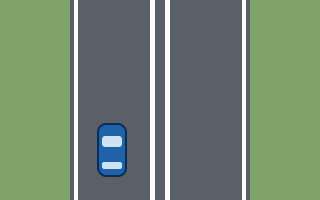
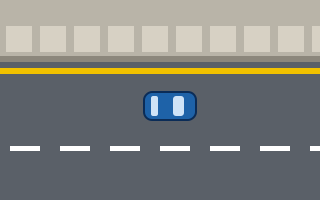
54. You are behind a slow truck on a two-way road with a continuous solid white line in the centre. What should you do?
Overtake quickly if no traffic is visible
Overtake only if you can do it within the speed limit
Stay behind; do not overtake across a solid centre line ✓
Flash your headlights and overtake
Answer C. Overtaking by crossing a continuous single or double solid line is prohibited. Wait until the marking and the road ahead allow a safe overtake. Rule: Overtake Only When It Is Safe
55. Are you allowed to exceed the speed limit to complete an overtake quickly?
Yes, for a few seconds
Yes, if the vehicle being overtaken is slow
No, never; if you cannot overtake within the limit, do not overtake ✓
Only on highways
Answer C. Regulation 14 expressly prohibits exceeding the maximum speed limit while overtaking. If you cannot complete the move legally and safely, it is not a safe opportunity. Rule: Overtake Only When It Is Safe
Turns & Junctions
56. Before turning left, a cyclist is riding alongside on your left. What should you do?
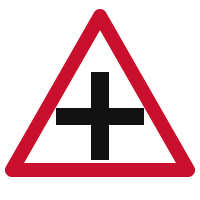
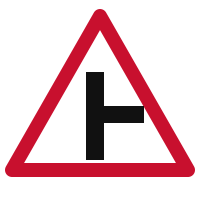
58. At an uncontrolled intersection (no signals, signs or police), which vehicle has the right of way?
The bigger vehicle
The vehicle that arrives fastest
The vehicle approaching from your right ✓
The vehicle approaching from your left
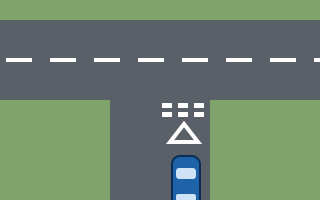
Answer C. At an uncontrolled junction, vehicles approaching from the right have the right of way. This does not apply when you leave a minor road to join a major road. Rule: Junctions, Intersections & Right of Way
59. What must you do at a STOP sign?
Slow down and continue if the road looks clear
Stop completely at the stop line, give way to traffic on the major road, then go when clear ✓
Sound the horn and proceed
Stop only if a police officer is present
Answer B. STOP means stop: halt before the stop line (or before the sign if there is no line), give way to traffic on the major road and to pedestrians, and enter only when it is clear. A rolling stop is not a stop. Rule: Junctions, Intersections & Right of Way
60. The light turns amber as you approach, and you can stop safely before the line. What should you do?
Answer B. Traffic already circulating in the roundabout has the right of way. Wait for a safe gap before entering. Rule: Use Roundabouts Safely
63. In India, which way does traffic circulate around a roundabout?
Anticlockwise
Clockwise ✓
Either way
It depends on the time of day
Answer B. India drives on the left, so traffic goes clockwise around a roundabout. The main danger when entering comes from traffic approaching from your right. Rule: Use Roundabouts Safely
Vulnerable Road Users
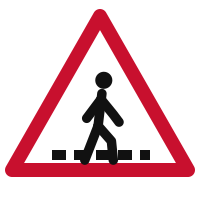
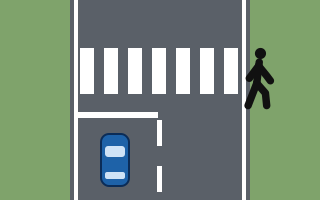
64. You approach an uncontrolled pedestrian (zebra) crossing and a person is waiting to cross. What must you do?
65. What is the maximum speed on a road with no footpath where pedestrians are walking on the carriageway?
25 km/h, or any lower signed speed ✓
40 km/h
50 km/h
There is no special limit
Answer A. Regulation 16(5) sets 25 km/h, or any lower signed speed, near signed schools, hospitals and construction sites, and on roads without footpaths where people walk on the carriageway. Rule: Protect Pedestrians, Cyclists & Two-Wheelers
66. You are walking on a road with no footpath. Which side should you walk on?
The left, with your back to traffic
The right, facing oncoming traffic ✓
The middle of the road
Either side, it makes no difference
Answer B. Where there is no footpath, walk on the right so you face oncoming traffic and can step aside. (India Drive Safe recommendation, as in the UK Highway Code.) Rule: Walk Safely: Footpaths, Crossings & Being Seen
67. What is the safest way to cross near a stopped bus?
Cross in front of the bus
Cross behind the bus
Wait until the bus has moved off and you can see the road clearly ✓
68. Who must wear a helmet on a motorcycle or scooter?
Only the rider
The rider and any pillion, including children above four years ✓
Only on highways
Only riders under 18
Answer B. Every person driving or riding on a motorcycle, including the pillion and children above four, must wear a BIS-certified helmet (turban-wearing Sikhs are exempt). The fine is ₹1,000 plus three months' licence disqualification. Rule: Ride a Two-Wheeler Safely: Helmets, Pillions & Being Seen
69. How many pillion passengers may a motorcycle carry?
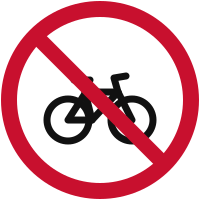
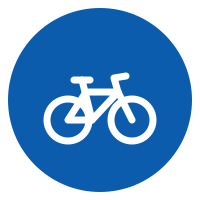
70. Which side of the road should a cyclist ride on in India?
The right, facing traffic
The left, in the same direction as traffic ✓
The middle of the lane
The footpath
Answer B. Cyclists should ride on the left with the flow of traffic, never against it, and not on footpaths. Rule: Ride a Bicycle Safely
71. What lights should a bicycle show at night?
A red light at the front and a white light at the back
A white light at the front and a red light and reflector at the back ✓
No lights are needed
A flashing blue light
Answer B. Use a white light at the front and a red light and red reflector at the back, plus pedal reflectors. (UK legal standard and India Drive Safe recommendation.) Rule: Ride a Bicycle Safely
72. Where is the safest place for a baby in a car?
Answer B. Under the Supreme Court's school-bus directions, a school bus must be painted yellow with 'SCHOOL BUS' written on the front and back. Rule: School Transport: Buses, Vans & Autos
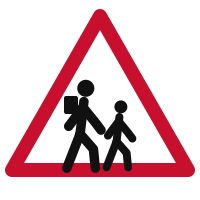
75. A school bus has stopped with its stop arm out and hazard lights on. What should you do?
Overtake it quickly
Sound the horn to warn children
Slow right down to walking pace and be ready to stop ✓
Continue at normal speed if you are on the other side
Answer C. A child may run out from in front of or behind the bus. Slow to walking pace from either direction and be ready to stop. (India Drive Safe recommendation; New Zealand sets a 20 km/h legal limit.) Rule: School Transport: Buses, Vans & Autos
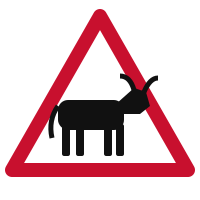
76. A herd of cattle is crossing the road ahead. What must you do?
78. Your car breaks down on a highway. Where should you place a reflective warning triangle?
On the roof of the car
Right beside the car
About 50 metres behind the vehicle ✓
You do not need one in daylight
Answer C. Switch on hazard lights at once and, on highways and fast roads, place a reflective warning triangle 50 metres behind the vehicle (or before the bend). Rule: Drive Safely on Highways & Expressways
79. What is the national maximum speed for cars on an expressway, unless a lower limit is signed?
80 km/h
100 km/h
120 km/h ✓
140 km/h
Answer C. MoRTH notification S.O. 1522(E) (2018) sets 120 km/h for cars on expressways. Signed limits for a particular stretch are often lower, and the sign always applies. Rule: Drive Safely on Highways & Expressways
80. You do not have a valid FASTag at a National Highway toll plaza. How much do you pay if you pay by UPI?
The normal toll
1.25 times the toll ✓
Double the toll
Three times the toll
Answer B. Since 15 November 2025, vehicles without a valid FASTag pay 1.25 times the toll by UPI or other digital payment, and double the toll in cash. Rule: Toll Plazas, FASTag & Police Checks
81. A police officer in uniform asks for your documents. Are documents in DigiLocker or mParivahan acceptable?
No, only original paper documents
Yes, they are legally valid ✓
Only the driving licence may be digital
Only in metro cities
Answer B. Since 2018, Rule 139 allows documents in electronic form, and DigiLocker/mParivahan records are recognised as equal to the originals. Rule: Toll Plazas, FASTag & Police Checks
Trucks, Buses & Large Vehicles
82. Where is the largest blind spot of a truck in Indian traffic?
Directly above the cab
Along the left side ✓
Along the right side only
There are no blind spots on trucks
Answer B. A truck driver cannot see directly in front, directly behind, or along much of the left side, the largest blind spot in left-hand traffic. If you cannot see the driver's face in the mirror, they cannot see you. Rule: Trucks, Buses & Large Vehicles: Share the Road Safely
83. A bus ahead of you is signalling and turning left at a junction. What should you do?
84. How close to a pedestrian crossing may you stop your vehicle?
You may stop on it briefly
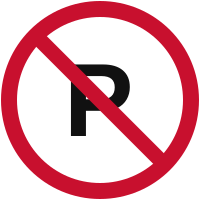
Not on it, and not within 5 metres before it ✓
Within 1 metre is fine
Anywhere if hazard lights are on
Answer B. Do not stop on a pedestrian crossing or within 5 metres before one. Hazard lights do not make illegal stopping legal. Rule: Stop, Park & Reverse Safely
85. Within what distance of a junction must you not park?
5 metres
10 metres
50 metres before or after the junction ✓
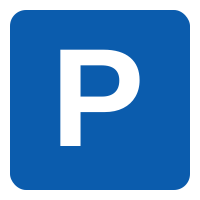
There is no rule
Answer C. Regulation 22 prohibits parking within 50 metres before or after the edge of an intersection or junction. Rule: Stop, Park & Reverse Safely
Difficult Conditions
86. In thick fog, which lights should you use?
High beam, to see further
Parking lights only
Dipped headlights, with fog lamps while visibility is seriously reduced ✓
No lights, to avoid glare
Answer C. High beam reflects off fog. Use dipped headlights, and fog lamps only while fog seriously reduces visibility, always together with dipped headlights. Rule: Drive Safely at Night, in Fog, Rain & on Hills
87. An oncoming vehicle's headlights dazzle you at night. What should you do?
Flash your high beam back
Slow down and look towards the left edge of the road ✓
90. An ambulance with siren and flashing lights is coming up behind you. What should you do?
Speed up to stay ahead of it
Move to the left as soon as it is safe, and stop if necessary ✓
Stop immediately where you are, even in the middle of a junction
Follow closely behind it once it passes
Answer B. Move left as close to the road edge as practicable as soon as you safely can, stop if needed, and keep at least 50 metres behind it afterwards. Failing to make way carries a ₹10,000 fine. Rule: Emergency Vehicles, Breakdowns & Crashes: What to Do
91. What is the all-India emergency number to call after a serious crash?
97. When may you use a mobile phone while driving?
To answer short calls holding it to your ear
To read messages at red lights
Only for route navigation, with the phone fixed on the dashboard ✓
Whenever traffic is slow
Answer C. Hand-held use while driving is prohibited. A device may be used only for route navigation, fixed on the dashboard and without distracting you. Using a hand-held phone counts as dangerous driving. Rule: Drive Calmly & Defensively: Attention, Sobriety & Respect
98. On a long journey, how often should you take a break?
99. You start yawning and drifting in your lane. What is the safest thing to do?
Open the window and turn up the music
Drive faster to reach home sooner
Stop in a safe place and take a short nap or rest ✓
Rest on the expressway hard shoulder
Answer C. These are signs you are about to fall asleep. Stop in a safe place off the carriageway (not the expressway shoulder), and nap or stop for the night. Fresh air and music work only for minutes. Rule: Fatigue & Long Journeys: Rest, Breaks & Night Driving
Your Vehicle & Documents
100. Which of these is not allowed on a private car's windows?
Factory-fitted tinted safety glass within the light limits
Black film or any film stuck on the glass ✓
Clean, clear glass
A rear-window defogger
Answer B. Following the Supreme Court's 2012 judgment in Avishek Goenka, no film of any kind may be applied to windscreens or windows. Only factory-fitted glass meeting the light-transmission limits is allowed. Rule: Keep Your Vehicle Roadworthy & Legal
101. Which documents must your car have valid at all times?
Registration, insurance and a pollution (PUC) certificate ✓
Only the registration certificate
Only the insurance policy
None, if the car is new
Answer A. A vehicle must be registered, have at least third-party insurance and hold a valid Pollution Under Control certificate. They may be carried on paper or in DigiLocker/mParivahan. Rule: Keep Your Vehicle Roadworthy & Legal
102. Who in a car must wear a seat belt?
Only the driver
The driver and front passenger only
The driver, the front passenger and passengers in the back seats ✓
Only on highways
Answer C. Rule 138(3) requires the driver, front passenger and passengers in forward-facing rear seats to wear seat belts. The driver is fined ₹1,000 for carrying unbelted passengers. Rule: Seat Belts, Airbags & Sitting Safely
103. Where should the lap part of a seat belt sit?
Across the stomach
Low across the hips and upper thighs ✓
Under the arm
Behind the back
Answer B. The lap belt should sit low across the hips and upper thighs, and the shoulder belt across the middle of the shoulder and chest. In pregnancy, the lap belt goes below the bump. Rule: Seat Belts, Airbags & Sitting Safely
104. Why should you take extra care near pedestrians when driving an electric vehicle?
EVs cannot brake as well
EVs are almost silent, so people may not hear you ✓
EVs are not allowed near pedestrians
EV headlights are dimmer
Answer B. Electric vehicles make little noise at low speed, so pedestrians, children and cyclists may not hear you coming. Slow down and be ready to stop. Rule: Electric Vehicles, E-Rickshaws & E-Scooters
105. What is the maximum number of passengers an e-rickshaw may carry, besides the driver?
106. What is the maximum speed when towing a broken-down vehicle?
15 km/h
25 km/h ✓
40 km/h
The normal speed limit
Answer B. When towing, do not exceed 25 km/h, keep the gap no more than 5 metres, make the rope visible and display ON TOW signs. Rule: Loads, Roof Racks & Towing
107. Long pipes are sticking out of your car's open boot. Is this allowed?
Yes, if you drive slowly
Yes, with a red cloth tied on
No; loads must not project beyond the vehicle's body ✓
Only at night
Answer C. Loads must not extend beyond the sides, front or rear of the vehicle. A projecting load carries a ₹20,000 fine. Rule: Loads, Roof Racks & Towing
Learning to Drive & Licences
108. How long is a learner's licence valid?
One month
Six months ✓
One year
Five years
Answer B. A learner's licence is valid for six months. You may take the driving test 30 days after it is issued, and before it expires. Rule: Learning to Drive & Your Licence
109. What is the minimum age to get a licence for a car?
16
17
18 ✓
21
Answer C. The minimum age is 18 for cars and other non-transport vehicles, 16 for motorcycles up to 50 cc (with parental consent) and 20 for transport vehicles. Rule: Learning to Drive & Your Licence
110. Can a person with mild or medium colour blindness get a driving licence in India?
Are these the exact questions asked in the RTO learner's licence test?
No. These are India Drive Safe's own questions on the same topics: road signs, rules of the road and safe driving. Learn the rules behind them rather than memorising answers, and you will be ready for any version of the question.
How many questions do I need to get right in the real test?
Usually 9 out of 15. Some States set a higher pass mark, so check your State's instructions on the Sarathi Parivahan portal.
Can I download these questions as a PDF?
Yes. Use the Download PDF button at the top of the page, or your browser's Print option to save a fresh copy.